Victorian Taxidermy Passenger Pigeon Under Glass Dome
Natural history taxidermy display on ebonised wooden base
Attributed to James Gardener
- Period
- Late Victorian, circa 1890
- Origin
- Britain
- Materials
- Taxidermy specimen, hand-blown glass dome, ebonised wood base, dried grasses, lichen, papier-mâché rockwork, textile cord
- Dimensions
- —
- Condition
- —
$16,500
The Story
A late Victorian taxidermy specimen of an extinct passenger pigeon, once the world’s most numerous bird, naturalistically mounted within an oval blown-glass dome. The bird is poised upon dried branches amidst a rustic groundwork of faux rockwork, dried grasses, and preserved mosses and lichens, arranged in the typical domestic style of the late nineteenth century. The last living individual, Martha, died in captivity in the Cincinnati zoo in 1914.
The composition rests upon an ebonised oval wooden plinth fitted with a recessed channel to receive the glass shade, bordered by the customary red chenille or wool twisted cord seal. Blown with slight irregularities typical of period glass, the dome has preserved the delicate arrangement in stable condition. Such glass-cased natural history specimens were staple domestic ornaments in Victorian parlours, reflecting the era's keen amateur interest in the natural world.
You may also covet
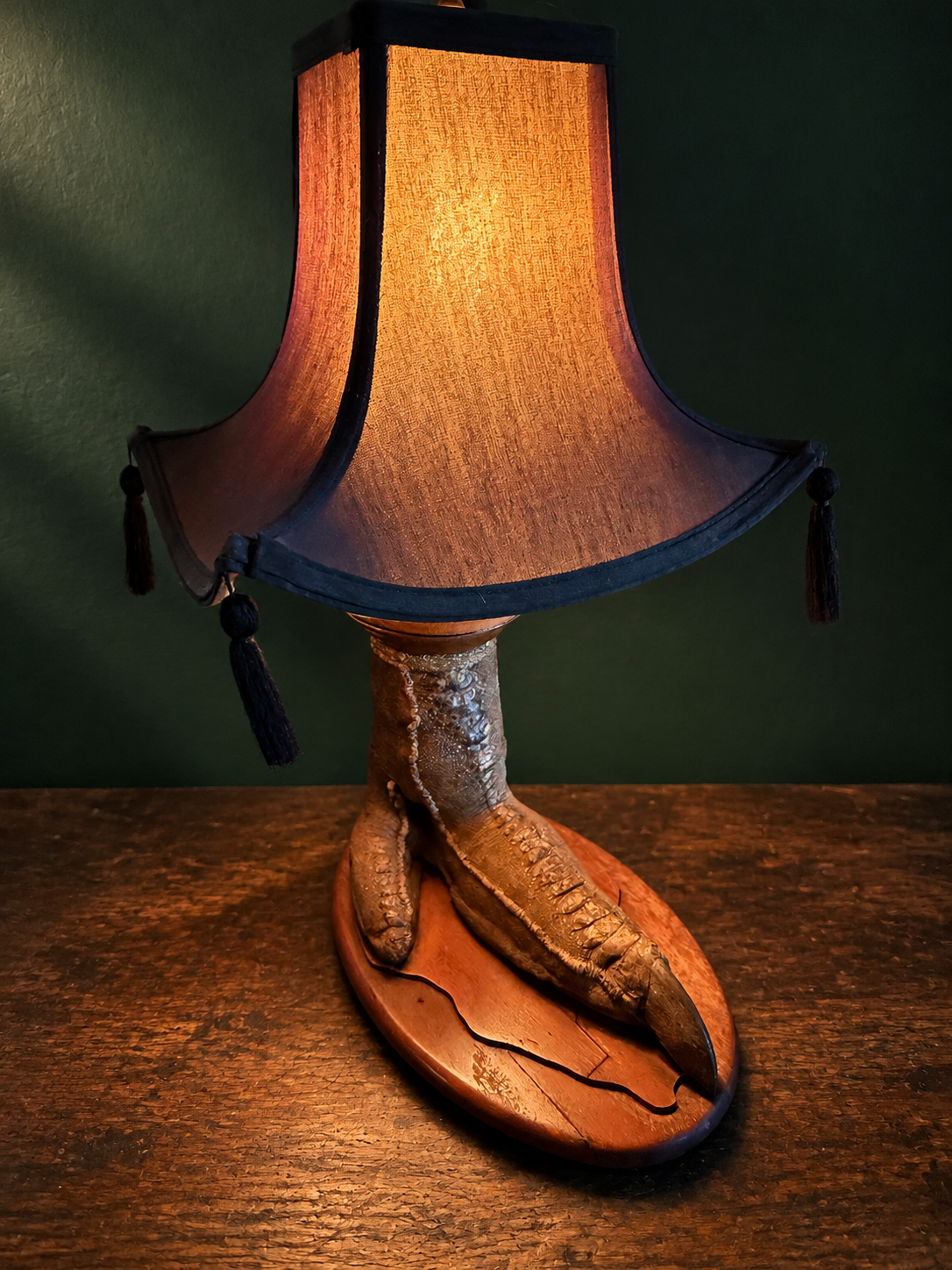
Taxidermy Ostrich Foot Table Lamp
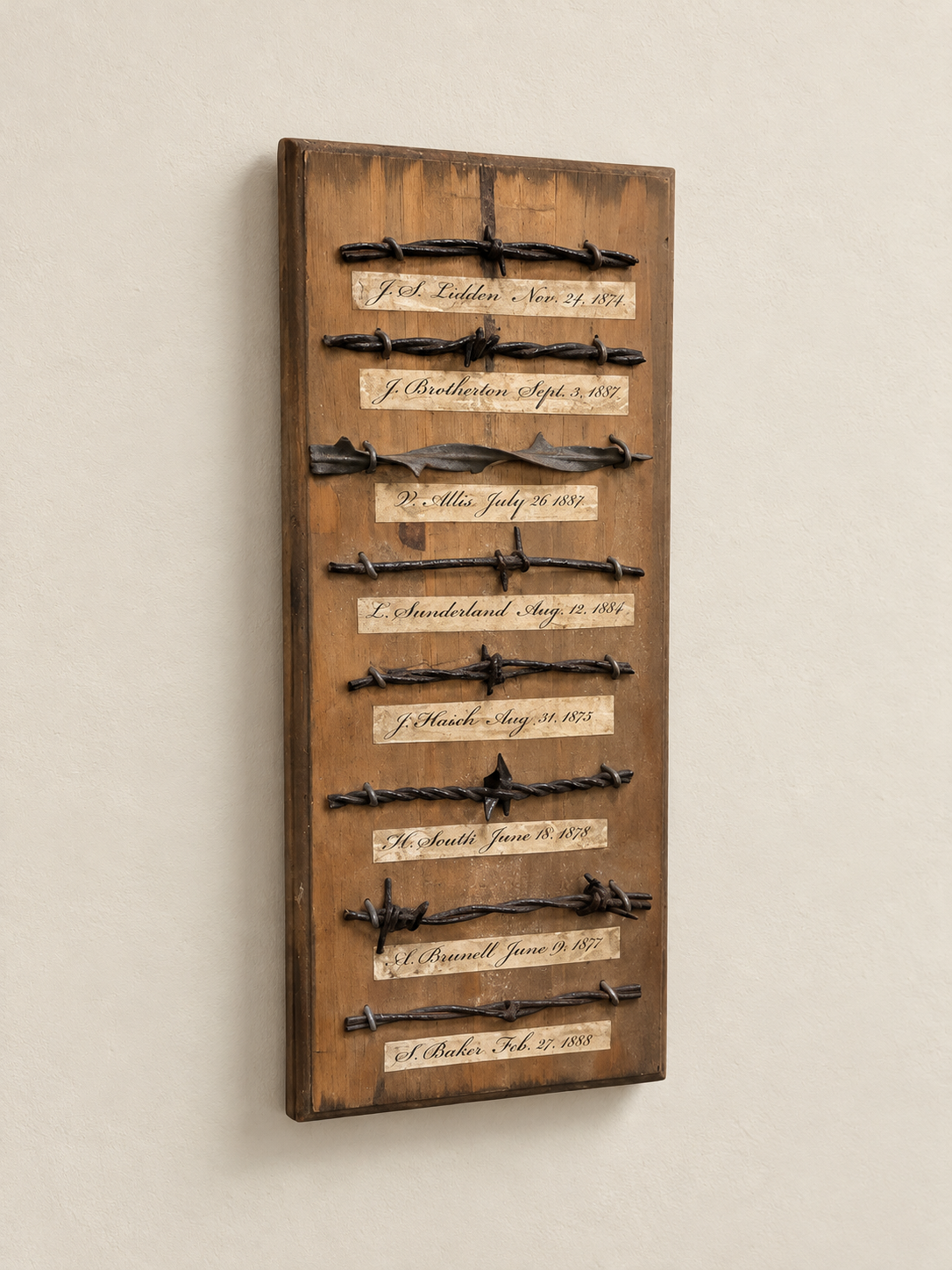
Collection of American Barbed Wire Patent Samples on Pine Board
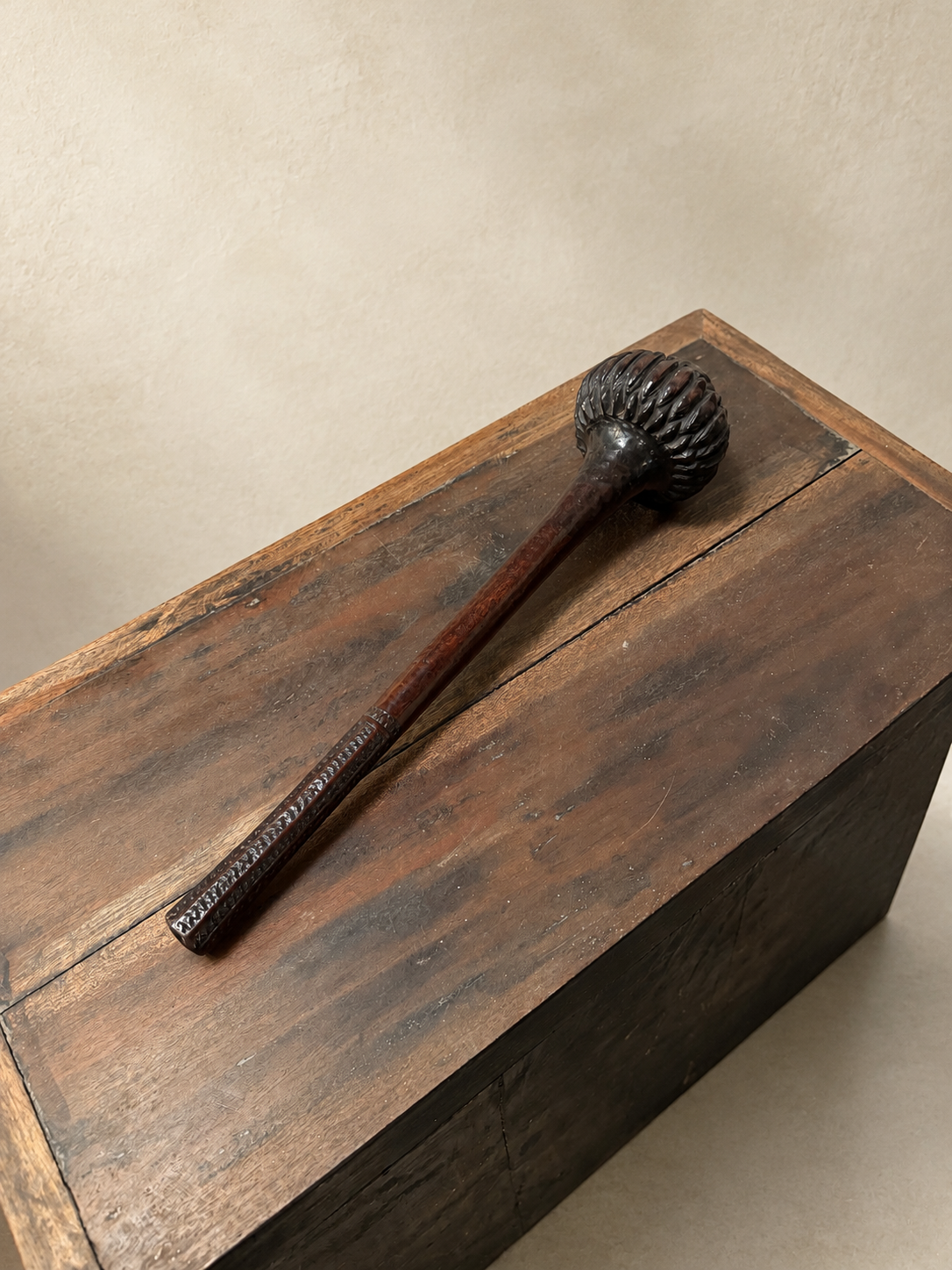
A Pair of Fijian Hardwood Throwing Clubs (i Ula)
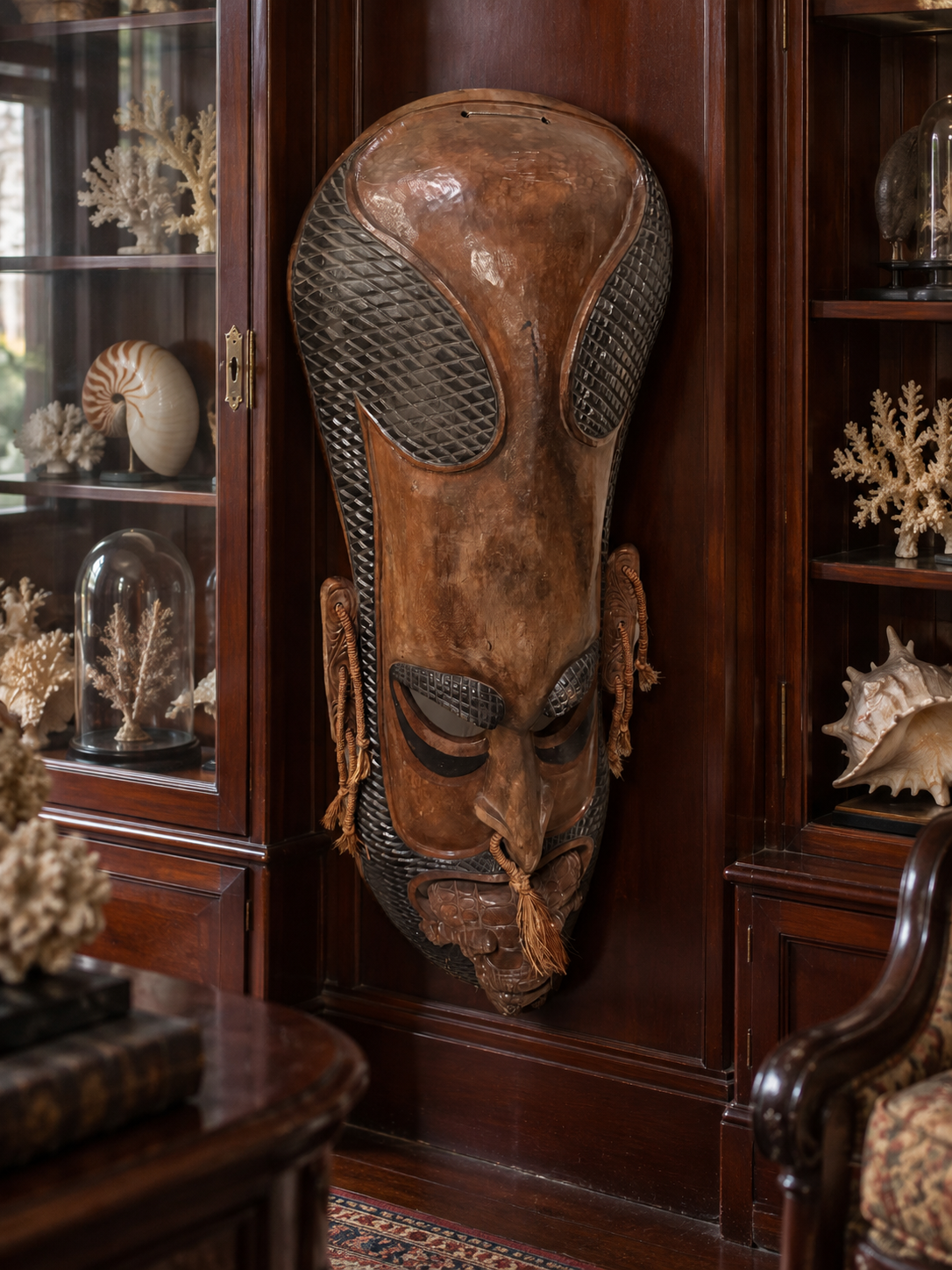
Monumental Carved Hardwood Decorative Mask